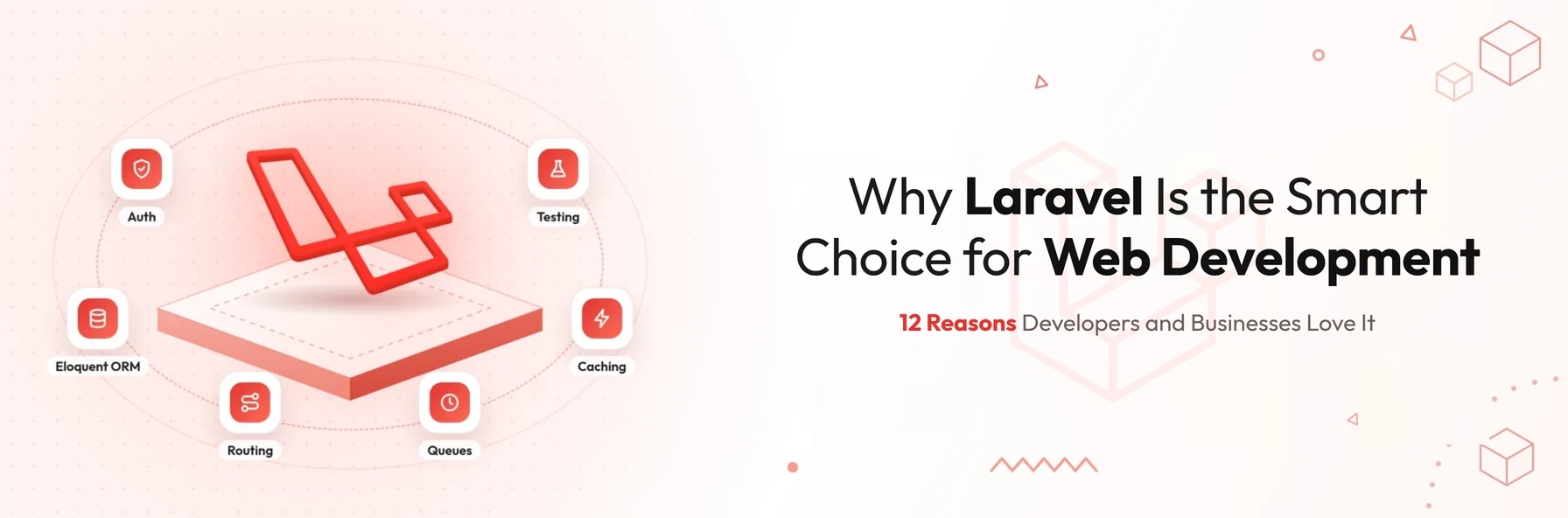
In short: Laravel is a free, open-source PHP framework for building web applications and APIs. It is popular because it handles common tasks out of the box, including authentication, security, caching, email, routing, task scheduling and database management. This lets teams build secure, maintainable applications faster, with less repetitive code.
Every web application needs the same foundations: user logins, secure data handling, emails, database management and background tasks. Building these from scratch for every project is slow, expensive and risky.
Laravel was created to make these common development tasks easier. It gives developers a clean, well-documented structure and a set of ready-made tools, so more time goes into the features that make your application unique.
This guide explains what Laravel is, the 12 main reasons we choose it at BSP Technologies, where its limitations lie, and when it is the right choice for your project.
What Is Laravel?
Laravel is an open-source PHP web application framework created by Taylor Otwell and first released in 2011. It follows the model-view-controller (MVC) architectural pattern and is known for its clean, readable syntax and extensive documentation.
Laravel is used to build a wide range of applications, including:
- SaaS platforms and subscription products
- e-commerce sites and B2B ordering portals
- customer, supplier and employee portals
- back-end APIs for mobile apps
- booking, CRM and internal business systems
It is free to use under the MIT licence and supported by a large global community, along with a growing ecosystem of official tools.
12 Reasons to Choose Laravel
1. Built-in authentication and authorisation
Laravel provides ready-made tools for user registration, login, password resets and email verification, including official starter kits. Its authorisation features, known as gates and policies, control exactly who can access which resources. For APIs and mobile apps, Laravel Sanctum provides lightweight token-based authentication.
Why it matters: secure access control is in place from day one, and unauthorised requests are denied consistently across the application.
2. Strong protection against common security threats
Laravel includes protection against many of the most common web vulnerabilities by default:
- 01SQL injection: the Eloquent ORM and query builder use parameter binding.
- 02Cross-site request forgery (CSRF): form submissions are protected by CSRF tokens.
- 03Cross-site scripting (XSS): the Blade templating engine automatically escapes output.
- 04Passwords: these are stored using secure hashing algorithms such as Bcrypt and Argon2.
- 05Sensitive data: this can be protected with built-in encryption.
Why it matters: security is part of the foundation rather than an add-on. Every application still needs secure coding practices, regular updates and security testing.
3. Simple email and notification system
Laravel's mail system works with popular providers such as SMTP, Mailgun, Postmark and Amazon SES through a single, consistent interface. Its notification system can send the same message through several channels, including email, SMS, Slack and in-app database notifications.
Why it matters: users can be kept informed about orders, account activity and important events without complex custom integrations.
4. Built-in caching for better performance
Laravel supports caching with fast data stores such as Redis and Memcached, as well as file and database caching. Frequently used data and query results can be stored and served quickly, without being recalculated on every request.
Why it matters: pages load faster, server load falls and the application handles more users with the same infrastructure.
5. Clear error and exception handling
Laravel handles errors and exceptions in one central place. It logs them in detail, can report them to monitoring services, and shows users friendly error pages instead of technical messages.
Why it matters: developers can find and fix problems faster, and users get a smoother experience when something goes wrong.
6. Automated testing built in
Laravel is built with testing in mind. It supports PHPUnit and Pest out of the box and includes helpers for testing HTTP requests, databases, emails and queued jobs. Laravel Dusk adds automated browser testing.
Why it matters: core features can be tested automatically before each release, which reduces bugs and makes it safer to add new functionality.
7. Clean MVC architecture
Laravel's MVC structure separates data and business logic (models), presentation (views) and request handling (controllers). The Blade templating engine keeps the interface separate from application logic.
Why it matters: designers and developers can work in parallel without conflict, the code is easier to debug, and new features can be added faster.
8. Simple, expressive routing
Laravel's routing system defines clearly how each URL maps to the code that handles it. Features such as named routes, route groups, middleware and route model binding keep routing organised. Route caching speeds it up in production.
Why it matters: URLs are predictable and easy to manage, which reduces broken links and makes development quicker.
9. Task scheduling and queues
Laravel's task scheduler lets developers define all recurring tasks in code, such as sending periodic emails or cleaning up old data. On the server, it needs only a single cron entry:
* * * * * cd /path-to-your-project && php artisan schedule:run >> /dev/null 2>&1Laravel's queue system moves slow tasks, such as sending emails or processing files, into the background, so users are not kept waiting.
Why it matters: routine work is automated and easy to manage, and the application stays fast under load.
10. Eloquent ORM for working with data
Eloquent, Laravel's object-relational mapper (ORM), lets developers work with database records as simple PHP objects instead of writing raw SQL for every query. Relationships between data, such as customers, orders and products, are easy to define and use.
Why it matters: database code is faster to write, easier to read and simpler to maintain.
11. Database migrations and seeding
Laravel's migrations act as version control for your database structure. Every change to tables and columns is written in code, shared across the team and applied consistently to development, testing and live environments. Seeders fill databases with test or starter data.
Why it matters: database changes are predictable and repeatable, without manual scripts or out-of-sync environments.
12. A rich ecosystem and active community
Laravel includes Artisan, a command-line tool that automates common development tasks. It is supported by a wide ecosystem of official tools for deployment, queue monitoring, admin panels and real-time features. A large global community also maintains packages, tutorials and support resources.
Why it matters: teams do not have to reinvent common features, and it is easier to find experienced Laravel developers.
Limitations of Laravel to Consider
Laravel is a strong choice for most web projects, but it has trade-offs:
- 01Framework overhead. For very small, single-purpose services, a lighter micro-framework may be simpler and faster.
- 02Regular upgrades. Laravel releases a new major version roughly once a year, so applications need planned upgrades to stay within the supported period for bug and security fixes.
- 03Performance tuning. High-traffic applications need caching, queues, database optimisation and suitable hosting to perform well. This applies to any framework.
- 04PHP-based. Laravel is built on PHP, so it may not be the natural fit for teams standardised on another language, such as JavaScript or Python.
When Is Laravel the Right Choice?
Laravel is usually a strong fit when you need:
- a secure web application, portal or SaaS product with user accounts
- a reliable back-end API for a mobile or web app
- complex business logic, data relationships and background tasks
- a maintainable codebase that can grow with your business
For a very small static site, a content management system may be simpler. For real-time systems at extreme scale, the architecture matters more than the framework choice.
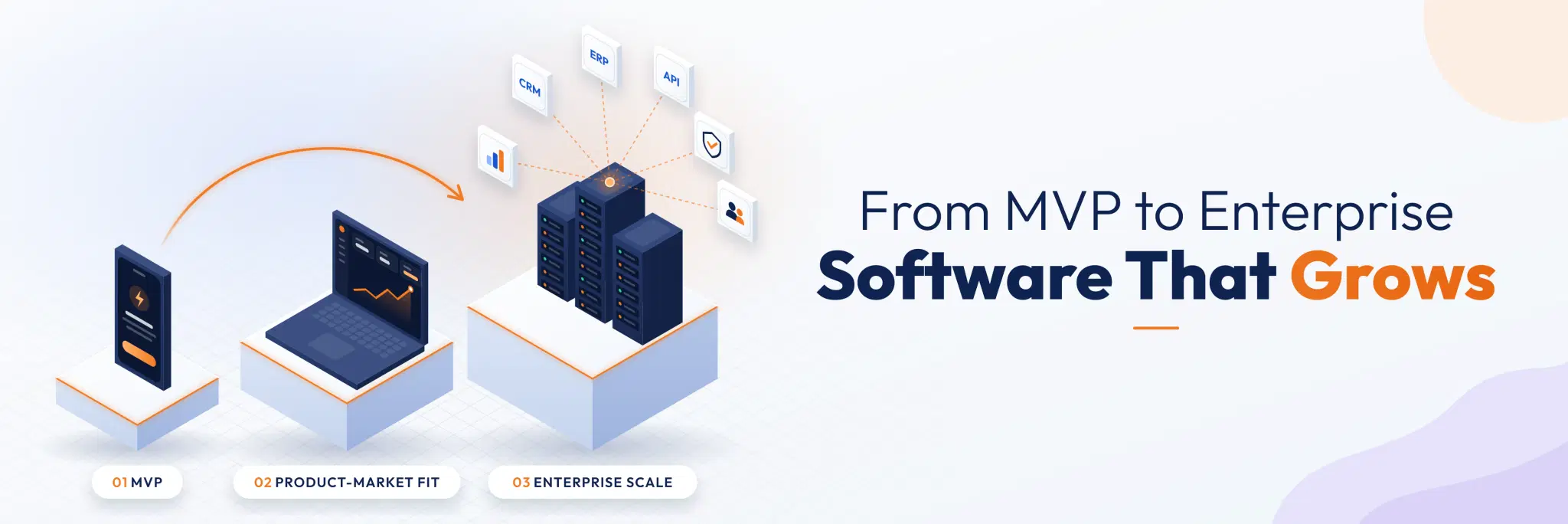
If you are still deciding whether you need a web application, our guide to the advantages of web applications covers the basics. Our article From MVP to Enterprise: How Great Software Evolves as Your Business Grows explains how to plan for growth.
Conclusion
Laravel removes much of the repetitive, error-prone work involved in building web applications. With built-in authentication, strong security defaults, caching, testing, scheduling and a clean architecture, it lets development teams focus on the features that matter to your business, while keeping the codebase secure and maintainable.
That is why Laravel is one of our preferred frameworks at BSP Technologies for web applications, portals, SaaS products and APIs.
Planning a web application or API?
Schedule a free consultation with BSP Technologies, and we will help you decide whether Laravel is the right fit for your project.
Schedule a Free ConsultationFrequently Asked Questions
Laravel is used to build web applications and APIs, including SaaS platforms, e-commerce sites, customer and employee portals, booking systems and back ends for mobile apps. It handles common needs such as authentication, security, email, caching and database management out of the box.
Yes. Laravel is open source and free to use under the MIT licence, including for commercial projects. Some optional tools in the wider Laravel ecosystem, such as hosting and deployment services, are paid. The framework itself has no licence fees.
Laravel includes strong built-in protection against common threats such as SQL injection, cross-site request forgery and cross-site scripting, along with secure password hashing and encryption. As with any framework, security also depends on following secure coding practices, keeping software updated and testing regularly.
Yes. Laravel supports large, complex applications through features such as queues, caching, modular architecture and clean separation of code. Performance at scale depends on good architecture, database optimisation and suitable hosting, which are important whichever framework you choose.
Laravel is primarily a back-end framework that handles business logic, databases, security and APIs. It can also render front-end pages with its Blade templating engine. It works well with front-end frameworks such as Vue and React, or with Livewire for interactive interfaces written in PHP.