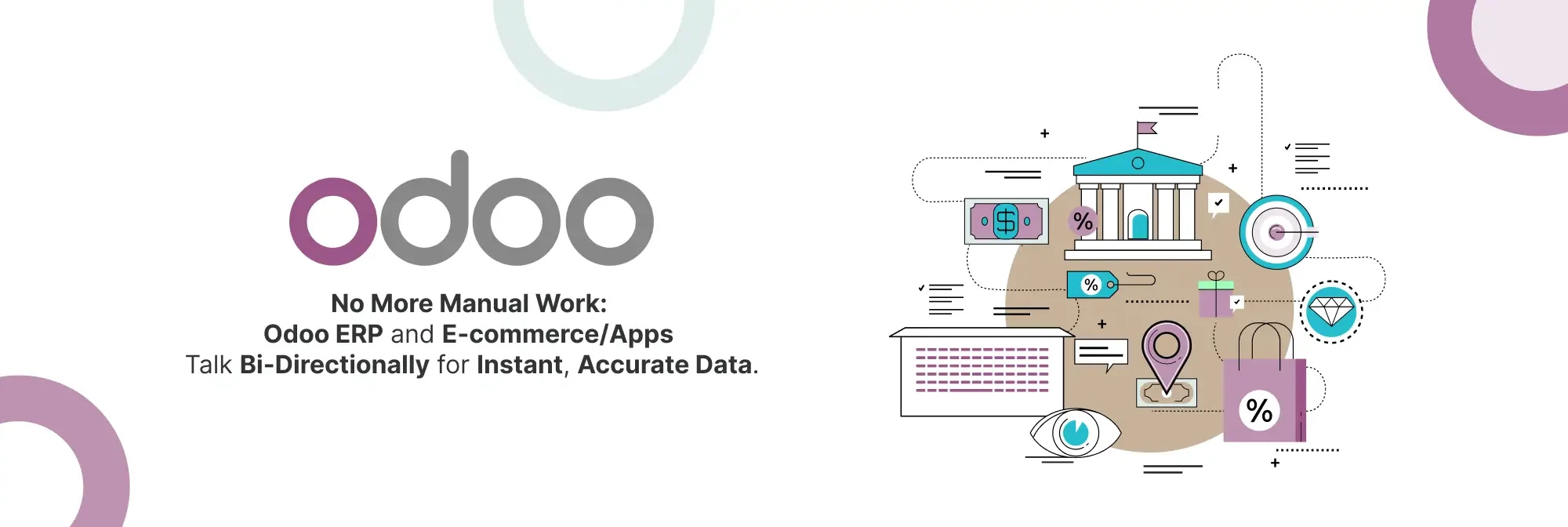
In short: BSP Technologies connected a client's high-traffic e-commerce website to Odoo, making Odoo the single source of truth for customers, pricing, products and orders. Sign-ups now flow into Odoo's CRM. Customers see prices based on Odoo's rules, catalogue changes sync automatically, and every completed order is pushed back into Odoo for accounting, delivery and stock updates.
In today's digital commerce landscape, customers expect more than a simple online storefront. They want personalised pricing, real-time updates, instant payments and a frictionless buying journey, without waiting for someone in the back office to process their request.
BSP Technologies recently delivered an integration that connected a client's high-traffic website with Odoo, reshaping their e-commerce workflow. This article explains why the client needed it, what we built, and what changed. It also covers which businesses are likely to benefit from a similar setup.
Why Connect Your E-Commerce Website With Odoo?
Most growing businesses eventually outgrow a standalone e-commerce system. As pricing rules, product variations, customer types, payment requirements and inventory grow, managing everything across separate systems becomes slow and error-prone.
A unified, Odoo-backed setup addresses this by:
- keeping pricing, inventory, discounts and customer categories in one source of truth
- eliminating duplicate data entry between systems
- enabling rule-driven workflows instead of manual updates
- allowing the business to grow without adding manual processes
- giving teams real-time visibility across sales, stock and finance
Our client needed all of this, and more.
The Challenge: Personalised Pricing and Real-Time Sync
The client had a large and growing catalogue with different pricing structures for:
- retail customers
- distributors
- corporate buyers
- specific regions
- customers with their own negotiated agreements
Managing all of this manually on the website was not scalable. It created a constant risk of:
- wrong prices being shown or charged
- delayed product and price updates
- lost orders
- a poor customer experience
The business needed a single source of truth for customers, products and pricing, and Odoo was the natural choice.
What BSP Technologies Built
We engineered a fully automated, two-way workflow between the website and Odoo. Here is how information now moves through the system:
- 01 Customer signs up or submits a form on the website
- 02 Customer profile is pushed into Odoo CRM
- 03 Website pulls the customer's prices from Odoo's pricing rules
- 04 Catalogue, availability and price changes sync from Odoo to the website
- 05 At checkout: customer category, pricing, payment rules and tax are fetched
- 06 Completed order is pushed back into Odoo
- 07 Accounting, delivery, stock, reporting and customer support work from the same order
1. Website leads and customer profiles pushed into Odoo
Every form submission and sign-up on the website is synced into Odoo's CRM. Sales and support teams see new leads and customers without re-entering anything.
2. Personalised pricing pulled from Odoo in real time
Instead of fixed website prices, each customer sees prices based on the rules stored in Odoo. This means a distributor, a corporate buyer and a retail customer can each see the right price for their agreement or region.
3. Catalogue updates synced from Odoo to the website
Products, variations, availability and pricing update on the website automatically when they change in Odoo. Nobody has to update two systems.
4. Integrated payments with personalised checkout logic
When a customer proceeds to checkout, the website fetches four things from Odoo:
- their customer category
- the correct pricing
- any custom payment rules
- the applicable tax structure
5. Complete order pushback into Odoo
Once a transaction is completed, the website sends the full order back to Odoo, where it is available for:
- accounting
- delivery
- stock updates
- reporting
- customer support
Before and After: How the Workflow Changed
| Area | Before | After |
|---|---|---|
| Pricing | Multiple price structures managed manually on the website | Prices pulled from rules stored in Odoo |
| Catalogue updates | Risk of delays and double work | Products, variations, availability and prices synced automatically |
| Customer and lead data | Captured on the website only | Pushed automatically into Odoo's CRM |
| Checkout | Risk of wrong pricing | Customer category, pricing, payment rules and tax fetched at checkout |
| Orders | Risk of lost orders | The full order is pushed back into Odoo |
| Data | Spread across separate systems | One source of truth in Odoo |
The Impact: Faster, More Accurate, More Scalable E-Commerce
After the integration went live, the client gained:
- 01Accurate, rule-based pricing: prices come from one set of rules in Odoo instead of manual website updates.
- 02Near real-time sync between the website and ERP: product, price and order data move automatically in both directions.
- 03A personalised buying experience: each customer type sees the prices that apply to them.
- 04A single source of truth: all product and customer data is held in one place.
- 05Less manual work: teams no longer update the website and the ERP separately.
- 06Better reconciliation: finance, sales and operations all work from the same order data.
This architecture now supports the client's long-term growth without requiring a bigger team or complex manual processes.
Who Should Consider Odoo-Backed E-Commerce?
An Odoo-backed e-commerce setup is particularly well suited to:
- brands with tier-based or negotiated pricing
- hybrid B2B and B2C businesses
- companies managing multiple product categories
- businesses that rely on accurate stock tracking
- teams that need CRM, accounting, inventory and sales kept in sync
- companies planning to scale internationally
If your website pricing changes frequently, or your team is updating several systems by hand, an integrated Odoo setup is worth serious consideration. For a business with a small catalogue and one price for everyone, a simpler setup may be enough. The right choice depends on how complex your pricing, stock and order processes are.
As your platform grows, our article From MVP to Enterprise: How Great Software Evolves as Your Business Grows explains how architecture decisions change at each stage. If you are choosing an integration partner, our guide on how to choose the right software development company covers the key questions to ask.
Conclusion
The future of e-commerce depends on reliable architecture, real-time data and integrated systems. By making Odoo the single source of truth, this client moved from manual website updates to an automated workflow that gives every customer the right price. Every order now flows straight into the systems that fulfil and account for it.
At BSP Technologies, we help brands around the world scale through smart engineering, not oversized teams. If your business is looking to improve stability, reduce manual processes, offer personalised experiences and scale without increasing overhead, an Odoo-powered e-commerce architecture could be your next growth step.
Planning an Odoo integration or struggling to keep your website and ERP in sync?
Schedule a free consultation with BSP Technologies, and we will help you design the right setup for your business.
Schedule a Free ConsultationFrequently Asked Questions
Odoo e-commerce integration connects an online store to Odoo ERP so that customers, products, prices, stock and orders are shared automatically between the two. Instead of updating the website and the ERP separately, the business manages data in Odoo, and the website reads from and writes back to it.
Yes. Odoo's pricing rules, known as pricelists, can apply different prices by customer, region, quantity or date. When a website is integrated with Odoo, it can pull those prices so that retail customers, distributors and corporate buyers each see the price that applies to them.
Both are valid. Odoo's built-in eCommerce module suits businesses that want everything in one platform. Connecting an existing website to Odoo suits businesses that want to keep their current front end, design or traffic while using Odoo for pricing, stock, orders and accounting.
The website and Odoo exchange data through Odoo's external API. Changes such as new sign-ups, price updates, stock changes and completed orders trigger updates in the other system, so both stay aligned without anyone copying data by hand.
Yes. Odoo can support retail customers alongside distributors and corporate buyers with negotiated pricing, which makes it a strong fit for hybrid B2B and B2C businesses. The integration needs to be designed around each customer type's pricing, payment and tax rules.