
Most businesses don't wake up one morning and decide they need new software. In fact, many continue using the same systems for years because, on the surface, everything appears to be working. Orders are processed, invoices are generated, customers are served, and reports are eventually produced. The software hasn't failed, so there's little reason to question it.
The problem is that businesses rarely stand still. They expand into new markets, hire more people, introduce new products, and adopt more complex ways of operating. Technology that once supported these ambitions gradually starts struggling to keep pace. Instead of making work easier, it creates friction that slows teams, complicates processes, and limits visibility across the organisation.
This shift is often so gradual that it goes unnoticed. Leaders attribute delays to growing teams, increasing workloads, or market conditions, when in reality, the underlying issue is much closer to home. The software that helped the business reach its current stage may no longer be the software that helps it move forward.
Your Business Has Grown. Has Your Software Kept Up?
Growth changes more than revenue. As organisations expand, they introduce new departments, serve more customers, launch new products, and manage increasingly complex operations. Every stage of growth adds new processes, more stakeholders, and a greater need for information to move quickly and accurately across the business.
The challenge isn't that your software suddenly becomes outdated. Most businesses invest in solutions that meet their needs at a particular stage, and those decisions are usually the right ones. The problem arises when the business evolves but the software supporting it doesn't. Systems that once handled straightforward workflows are suddenly expected to support cross-functional collaboration, larger volumes of data, and faster decision-making without ever being designed for that level of complexity.
This is where software starts creating friction instead of removing it. Teams develop workarounds, information becomes fragmented, and routine tasks take longer than they should. The software continues to function, but it no longer enables the business to operate as efficiently or as confidently as it needs to.
The Warning Signs Your Business Software Is Holding You Back
The warning signs rarely appear overnight. They develop gradually as the business grows and operations become more complex. What begins as a few manual tasks or an extra spreadsheet eventually becomes part of everyday work, making inefficiencies feel normal.
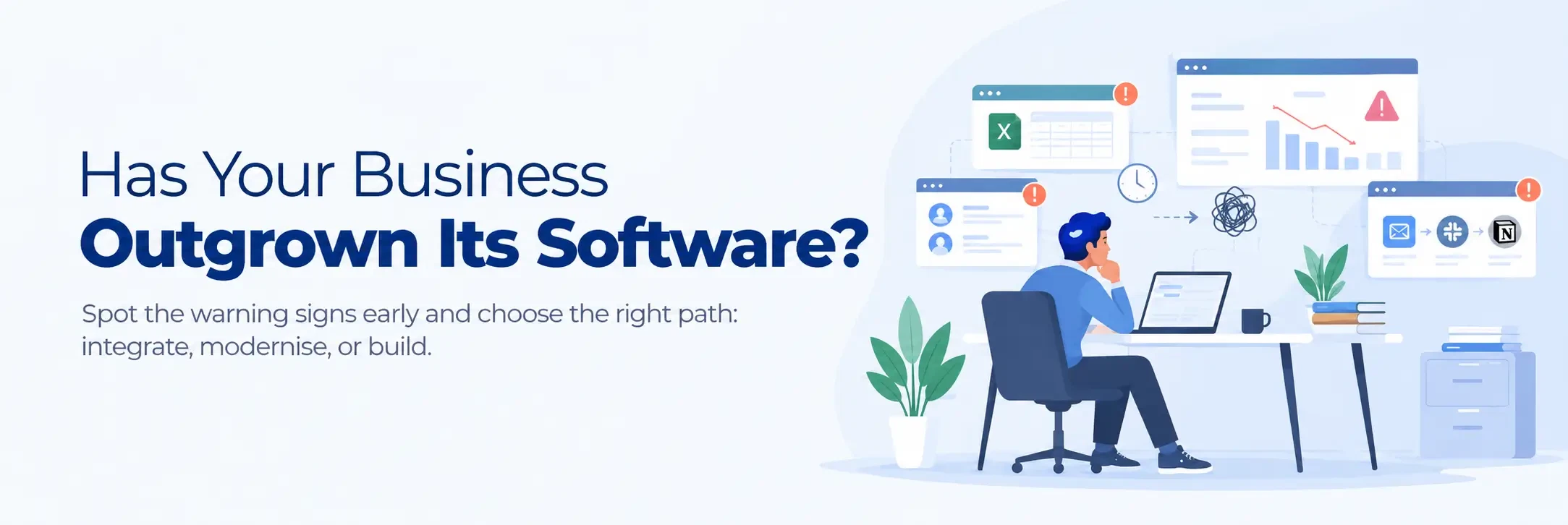
You might notice employees entering the same data into multiple systems, teams relying on spreadsheets to bridge information gaps, or reports taking days instead of minutes. Different departments work with different versions of the same data, while simple processes require emails, calls, or manual approvals to keep moving. These aren't isolated issues. They're signs that your software is no longer supporting the way your business operates.
The biggest warning sign is when technology starts shaping business decisions. If launching a new service, entering a new market, or improving customer experience feels difficult because your systems can't support the change, it's time to rethink whether your software is enabling growth or holding it back.
At a Glance: Your Software May Be Holding You Back If...
- Teams rely on spreadsheets to fill gaps
- Data is duplicated across multiple systems
- Reporting takes longer than it should
- Employees switch between several applications to complete one task
- Technology limits new products, services, or expansion
Why Adding More Software Often Makes the Problem Worse
Once these warning signs become difficult to ignore, businesses naturally start looking for solutions. More often than not, the first response is to invest in another software application. A reporting platform promises better visibility, a workflow tool simplifies approvals, or a specialist application fills a specific operational gap. While each investment may solve an immediate problem, it rarely addresses the underlying cause.
Over time, this approach creates a technology stack made up of disconnected applications that weren't designed to work together. Customer information sits in one system, financial data in another, and operational updates somewhere else. Instead of streamlining work, employees spend more time switching between platforms, reconciling information, and managing duplicate data. The business doesn't become more efficient; it simply becomes more dependent on fragmented technology.
Is the business missing another software solution, or is it missing a technology strategy?
Before investing in another platform, it's worth asking that question. In many cases, the answer isn't buying more software. It's ensuring the systems already in place work together effectively, support the way the business operates today, and can continue to support where it's headed next.
Should You Replace, Integrate, or Modernise Your Software?
Recognising the problem is only half the challenge. The next step is deciding how to solve it. Many businesses assume replacing their software is the only option, but that's rarely the case. The right approach depends on what's causing the bottleneck and whether your existing technology can still support future growth.
If your systems work well individually but don't work well together, integration may be enough. If they're outdated or no longer meet business needs, modernisation could be the better investment. Only when existing technology can no longer support the business should replacing or building new software become the preferred option.
The important point is that the decision should be driven by business needs, not technology trends. The goal isn't to adopt the latest technology. It's to create systems that simplify operations, improve visibility, and support the way your business works today while remaining flexible for tomorrow. The table below summarises when each approach is typically the right fit.
| If your challenge is... | Consider... |
|---|---|
| Systems don't communicate | Integration |
| Software is outdated but still valuable | Modernisation |
| Manual, repetitive tasks | Automation |
| Existing tools no longer meet business needs | Custom software |
Technology Should Support Growth, Not Limit It
Business software should make work easier, not more complicated. When systems start creating delays, duplicate work, or disconnected processes, it's often a sign that the technology hasn't evolved alongside the business. Addressing these issues early can improve efficiency, reduce operational risk, and create a stronger foundation for future growth.
At BSP Technologies, we help businesses make informed technology decisions based on their goals, existing systems, and long-term plans. Whether the right solution is integration, modernisation, automation, or custom software development, the focus is always on creating technology that supports the business today and scales with it tomorrow.
Is your current software still serving your business?
Now is the time to evaluate your options. Contact us to discuss your technology challenges and discover the right path forward.
Talk to Our TeamFrequently Asked Questions
Businesses of all sizes can benefit. Modernisation is about ensuring your technology supports your current operations and future growth, regardless of company size.
Start by reviewing how your teams use the software daily. Frequent workarounds, manual processes, and disconnected data often indicate that it's time to evaluate your technology.
The timeline depends on the complexity of your systems and business requirements. Smaller improvements may take weeks, while larger transformation projects can take several months.
In many cases, yes. Modern integration tools and APIs allow businesses to connect existing software with newer platforms, extending the value of their current technology investments.
Business goals should always come first. The most effective technology decisions are based on operational needs, growth plans, and long-term value rather than the latest industry trends.