Businesses today rely on technology to do far more than automate tasks. Digital products now drive customer experiences, streamline operations, enable new revenue streams, and provide businesses with a competitive advantage. However, many organisations still approach software as a one-time project. The result is applications that become difficult to maintain, expensive to scale, and unable to keep pace with changing business requirements.
Whether you're launching a SaaS platform, modernising legacy software, digitising internal operations, or developing connected solutions with AI or IoT, success depends on more than writing quality code. It requires careful planning, the right architecture, seamless integrations, and a strategy that supports the product long after launch. This is where product engineering comes in.
Instead of focusing only on delivering software, product engineering focuses on building products that continue creating value throughout their lifecycle. It combines business strategy, design, engineering, cloud technologies, testing, integrations, and continuous improvement into a structured approach that helps organisations build reliable, scalable, and future-ready digital products.
What is Product Engineering?
Product engineering is the end-to-end process of designing, developing, deploying, maintaining, and continuously improving digital products. Rather than treating software as a standalone project with a fixed end date, it views technology as a business asset that evolves alongside customer expectations, operational requirements, and market changes.
The process begins with understanding the business rather than selecting technologies. Engineering teams analyse goals, users, workflows, and challenges before deciding how the product should be designed and built. This ensures technology decisions support measurable business outcomes instead of simply delivering requested features.
Once a product is launched, the work doesn't stop. Performance is monitored, customer feedback is analysed, new features are introduced, and integrations are expanded as the business grows. This continuous approach allows products to remain relevant without requiring major redevelopment every few years.
Product engineering typically includes
- Product discovery and business analysis
- UX and UI design
- Software architecture
- Web and mobile application development
- API and third-party integrations
- Cloud infrastructure and DevOps
- AI and automation capabilities
- Hardware and IoT integration where required
- Testing, deployment, maintenance, and ongoing support
Product Engineering vs Traditional Software Development
Although the two terms are often used interchangeably, they solve different business problems.
Traditional software development is primarily concerned with delivering a predefined scope. Requirements are collected, features are developed, testing is completed, and the project is handed over. This approach works well for applications with stable requirements and limited future change.
Product engineering takes a broader view. Every decision is made with the product's long-term success in mind, considering scalability, integrations, user experience, security, performance, and future enhancements. Instead of measuring success by project completion, it measures success by how effectively the product continues supporting business growth.
| Traditional Software Development | Product Engineering |
|---|---|
| Project focused | Product focused |
| Delivers agreed features | Solves long-term business needs |
| Ends after deployment | Continues throughout the lifecycle |
| Measures project completion | Measures business outcomes |
| Limited post-launch involvement | Continuous optimisation and innovation |
As businesses become increasingly dependent on technology, this shift from project thinking to product thinking helps reduce technical debt, improve adaptability, and maximise long-term return on investment.
Why Product Engineering is Becoming More Important
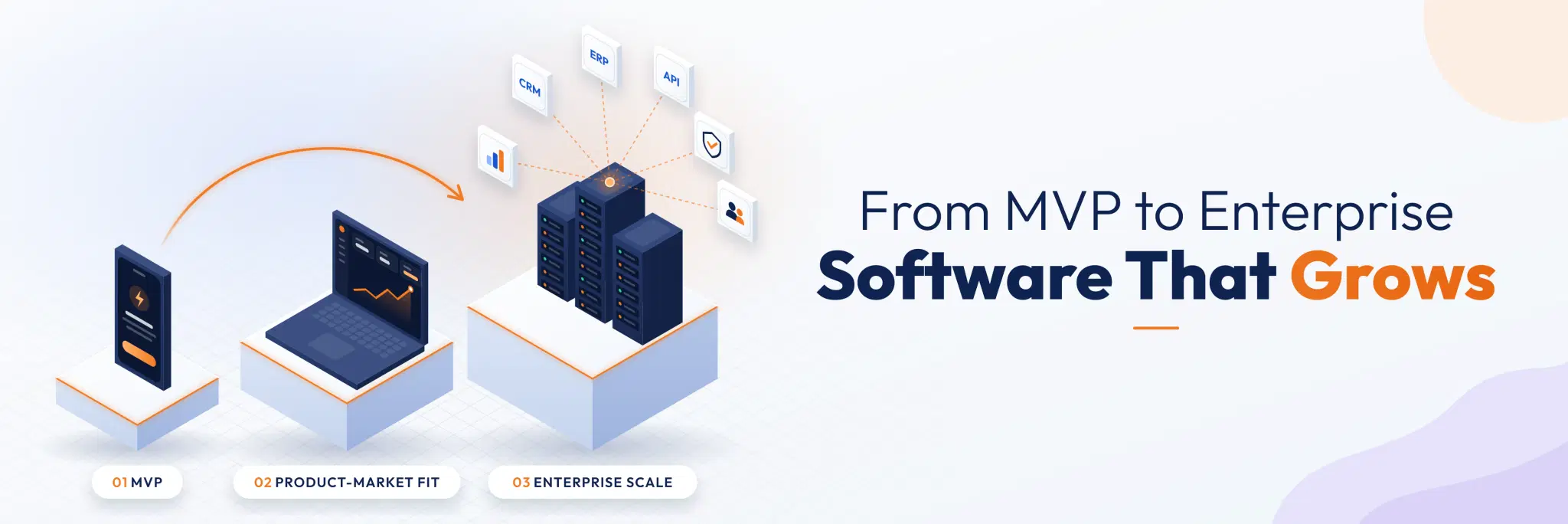
Modern businesses rarely rely on a single application. Customer portals, ERP systems, CRMs, payment gateways, mobile apps, AI tools, and third-party platforms all need to work together. At the same time, customers expect faster experiences, better security, and continuous innovation. Meeting these expectations requires technology that is designed to evolve rather than remain static.
Product engineering addresses this challenge by creating products that can grow with the business. Instead of rebuilding systems whenever requirements change, organisations gain a flexible foundation that supports future integrations, new technologies, and changing customer needs. For businesses planning long-term digital growth, this approach reduces risk while protecting technology investments.
The Product Engineering Lifecycle
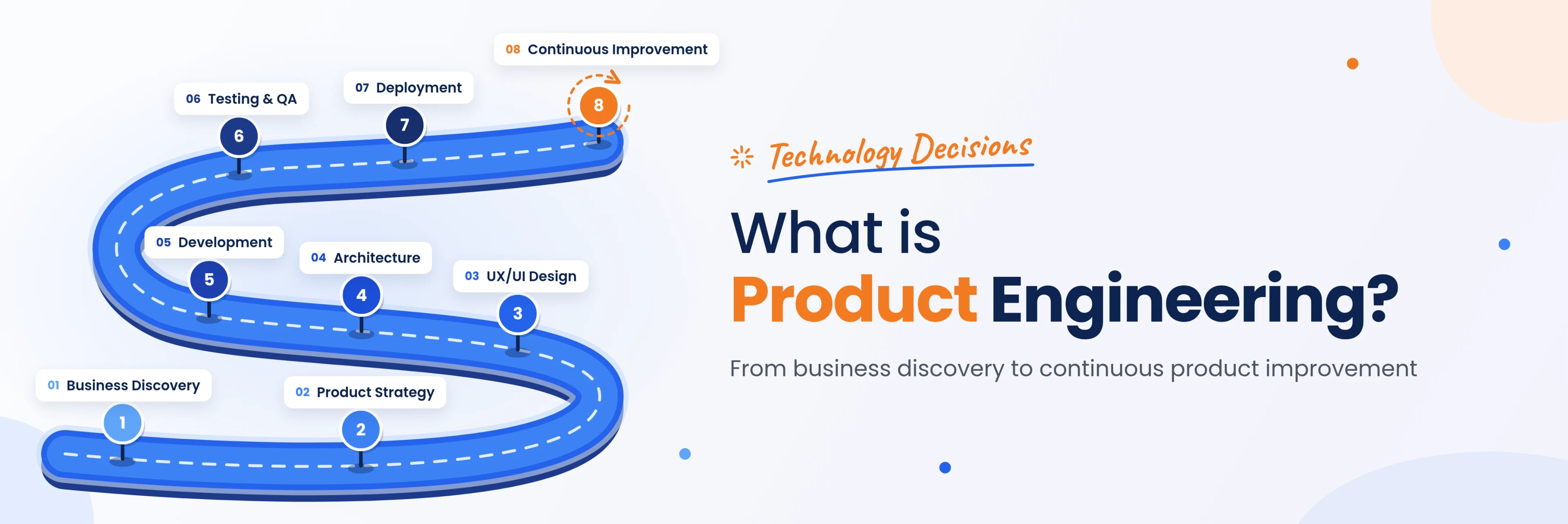
Successful digital products are not built in a single development phase. They evolve through continuous planning, development, testing, and improvement as business requirements change. Product engineering follows a structured lifecycle that ensures every stage contributes to the product's long-term success rather than simply delivering a working application.
This lifecycle also encourages collaboration between business stakeholders, designers, developers, and operations teams. Instead of working in isolation, each phase builds on the previous one, reducing costly rework and enabling faster delivery of features that create measurable business value.
A typical product engineering lifecycle
- 01Business Discovery
- 02Product Strategy
- 03UX/UI Design
- 04Architecture Planning
- 05Development
- 06Testing & Quality Assurance
- 07Deployment
- 08Continuous Improvement
While every product follows a different journey, maintaining this structured approach helps businesses build solutions that remain reliable, adaptable, and easier to maintain over time.
Core Components of Product Engineering
Product engineering brings together multiple disciplines that work as one integrated process. Instead of treating design, development, infrastructure, and support as separate services, they are aligned around a single objective: building a successful product.
The exact services vary depending on the project, but most product engineering engagements include the following components.
Product Discovery
Before development begins, engineering teams analyse business goals, user needs, operational workflows, and technical requirements. This helps prioritise features that deliver the greatest business impact while reducing unnecessary development.
Product Design
User experience plays a significant role in product success. UX and UI design ensure the product is intuitive, accessible, and consistent across different devices, helping improve user adoption and satisfaction.
Software Development
This stage focuses on building secure, scalable web applications, mobile apps, SaaS platforms, enterprise software, or custom business solutions using modern engineering practices and maintainable architecture.
Integrations and Cloud Infrastructure
Most businesses rely on multiple software platforms. Product engineering connects CRMs, ERPs, payment gateways, accounting software, communication tools, and other third-party systems while leveraging cloud infrastructure for scalability, performance, and security.
AI and Emerging Technologies
As businesses adopt AI, automation, IoT, and connected devices, product engineering ensures these technologies integrate seamlessly into existing products instead of becoming isolated solutions.
When Does Your Business Need Product Engineering?
Not every software project requires a complete product engineering approach. However, as organisations grow, technology often becomes central to operations, customer experience, and business strategy. At this stage, developing software feature by feature is no longer enough.
Product engineering helps businesses create products that can scale, integrate with new technologies, and adapt to changing market demands without repeated redevelopment. Instead of solving today's problems alone, it prepares technology for tomorrow's opportunities.
You should consider product engineering if you are:
- Launching a SaaS product or digital platform
- Modernising legacy software
- Replacing manual or spreadsheet-based processes
- Integrating multiple business systems
- Building customer, employee, or partner portals
- Developing products with AI or automation
- Connecting software with hardware or IoT devices
- Planning long-term product growth and innovation
If your software is becoming a strategic asset rather than simply an operational tool, product engineering provides the structure needed to support sustainable business growth.
Industries That Benefit Most from Product Engineering
Product engineering is relevant across industries where technology plays a critical role in delivering services, improving operational efficiency, or creating better customer experiences. While SaaS businesses are often early adopters, manufacturers, healthcare providers, logistics companies, retailers, and enterprises are increasingly investing in product engineering to modernise operations and stay competitive.
The common requirement is not the industry itself but the need for technology that can evolve as the business grows. Instead of replacing software every few years, organisations can continuously improve existing products, introduce new capabilities, and integrate emerging technologies without disrupting day-to-day operations.
| Industry | Common Product Engineering Use Cases |
|---|---|
| Manufacturing | Production management, inventory systems, IoT integration |
| Healthcare | Patient portals, hospital management, telehealth platforms |
| Logistics | Fleet management, warehouse automation, shipment tracking |
| Waste Management | Digital compliance, weighbridge integration, reporting systems |
| Retail & eCommerce | Customer portals, loyalty platforms, order management |
| Education | Learning management systems and student portals |
| Events | Ticketing, attendee management and access control |
| Financial Services | Secure customer platforms and workflow automation |
Choosing the Right Product Engineering Partner
Choosing a product engineering partner is a strategic business decision. Beyond technical expertise, the right partner should understand your industry, business objectives, users, and long-term vision. A successful product is built through collaboration, where engineering decisions support commercial goals rather than simply delivering technical requirements.
It's equally important to evaluate what happens after launch. Products require enhancements, security updates, performance improvements, and new integrations over time. Working with a partner that provides long-term engineering support ensures your product continues evolving without the need to start from scratch whenever business requirements change.
Look for a partner that can:
- Understand business challenges before proposing solutions
- Design scalable software architecture
- Develop web, mobile, and cloud applications
- Integrate APIs and third-party platforms
- Implement AI, automation, and connected technologies
- Provide quality assurance and DevOps support
- Offer long-term maintenance and product enhancement
How BSP Delivers Product Engineering
At BSP Technologies®, product engineering begins with understanding the business problem rather than recommending technology. Every engagement starts with discovery, helping clients define objectives, identify operational challenges, and build a roadmap that aligns engineering decisions with measurable business outcomes.
With expertise across custom software development, cloud engineering, AI solutions, hardware-software integration, enterprise applications, and legacy system modernisation, BSP supports businesses throughout the entire product lifecycle. Rather than acting as a development vendor, the team works as a long-term engineering partner, helping organisations build products that are scalable, secure, and ready for future growth.
Conclusion
Building software is no longer enough. Businesses need digital products that can adapt to changing customer expectations, integrate with evolving technologies, and support growth without constant redevelopment.
Product engineering provides that foundation by combining strategy, design, engineering, cloud technologies, integrations, testing, and continuous improvement into one structured approach. Whether you're launching a new product or modernising an existing one, investing in product engineering helps create technology that delivers value long after the initial release.
As digital transformation continues across industries, organisations that adopt a product engineering mindset will be better positioned to innovate, scale, and respond to future opportunities with confidence.
Frequently Asked Questions
Product engineering is the end-to-end process of designing, developing, deploying, maintaining, and continuously improving digital products throughout their lifecycle.
Software development focuses on building applications, while product engineering combines strategy, design, development, deployment, and ongoing optimisation to support long-term business goals.
No. Startups, SMEs, and large enterprises can all benefit, particularly when building scalable digital products or modernising existing systems.
Yes. Modern product engineering often includes AI, automation, cloud services, APIs, and hardware integration where they support business objectives.
Yes. Legacy applications can be upgraded, integrated with modern technologies, and enhanced without always replacing the entire system.
The timeline depends on the product's complexity, integrations, and business requirements. Many organisations choose phased delivery to achieve faster business value.
BSP Technologies® combines business discovery, software engineering, AI, cloud, integration, and long-term product support to help organisations build scalable digital products aligned with their business goals.